
Secureroot's SOC services India & SIEM Monitoring with Threat Intelligence as a Service delivers 24×7 detection, investigation, and response across your endpoints, network, cloud, and SaaS environments. Senior SOC analysts, custom-engineered detection rules, integrated commercial and open-source threat intelligence feeds, MITRE ATT&CK-aligned coverage, and rapid incident response coordination. ISO 27001 certified team. CERT-In aligned.
SecureRoot’s SOC services in India give you a 24/7 Security Operations Centre – continuous monitoring, threat detection and incident response – without the cost of building one in-house.
SOC services in India provide a Security Operations Centre that continuously monitors your systems, detects threats and responds to incidents around Read More ...
the clock. Instead of building and staffing your own 24/7 team, you get analysts, SIEM tooling and detection content as a managed service. A SOC collects and correlates logs from your endpoints, network, cloud and applications, triages alerts, investigates genuine threats, and coordinates response before damage spreads. SecureRoot delivers monitoring, threat hunting and incident response mapped to MITRE ATT&CK, with clear escalation and reporting. Ideal for businesses that cannot staff overnight coverage or that must meet monitoring requirements for compliance. Delivered as a fully managed service tuned to your environment and risk profile.
Delivered as SOC as a service (SOCaaS), our model removes the biggest barrier to 24/7 security – the cost and difficulty of hiring and retaining round-the-clock analysts. You get enterprise-grade detection from day one, sized to your environment.
Our 24/7 managed SIEM monitoring correlates signals across your whole estate, so a quiet anomaly on one system is connected to activity elsewhere before it becomes a breach. It works hand in hand with breach and attack simulation to validate detections and our wider managed cybersecurity services.
Validate your detections with breach and attack simulation and combine with full managed cybersecurity services.















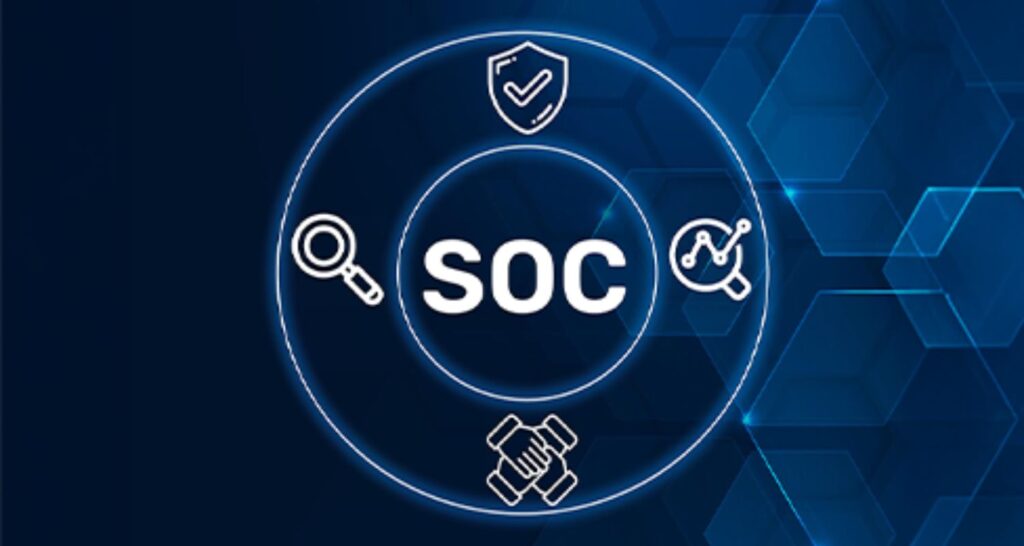
A Security Operations Center (SOC) is a dedicated team – and the technology stack supporting it – that monitors, detects, investigates, and responds to security threats in real time. SIEM (Security Information and Event Management) is the platform that aggregates logs from across your environment, correlates events, and surfaces anomalies. Threat intelligence (TI) is the continuously-updated knowledge about adversaries, their tactics, infrastructure, and indicators of compromise. Together, these three layers form modern security operations – you can’t have effective SOC without strong SIEM and current threat intel.
The projected damage from cybercrime worldwide in 2025 exceeded $10.5 trillion annually – and continues climbing. Attackers continually evolve to bypass traditional defenses: living-off-the-land techniques using legitimate tools, encrypted command-and-control, identity-based attacks, and supply chain compromises. Static security controls (firewalls, antivirus, basic logging) catch yesterday’s attacks but miss today’s adversaries. A modern SOC with 24×7 visibility, behavioural analytics, and threat intelligence is the only sustainable defense against this evolving threat landscape.
Building an in-house SOC is expensive and challenging: ₹3-8 crore initial investment, 8-12 senior analyst FTEs working in rotating shifts, SIEM platform licensing, threat intelligence subscriptions, and 12-18 months to operational maturity. The talent shortage makes hiring and retention exceptionally difficult. Most organisations get far better results faster with SOC-as-a-Service: senior expertise on day one, 24×7 coverage from launch, established detection content library, integrated threat intelligence, and predictable monthly cost. Secureroot delivers managed SOC services with the rigor of an in-house team and the economics of a service model.

Aligned with MITRE ATT&CK detection framework, NIST SP 800-61 incident response guidelines, and SANS SOC operations best practices. Every SOC engagement runs through these six phases – from threat intelligence to continuous improvement.

The SOC initiates threat tracking and intelligence collection – focused on vulnerabilities, adversaries, and TTPs relevant to your organisation’s infrastructure, industry, users, and public-facing assets. This informs attack vector understanding and shapes detection priorities.

Custom detection rules and use cases engineered for YOUR specific environment, business risks, and threat profile. Not generic templates – every rule tested against your log sources, tuned for your alerting tolerance, mapped to MITRE ATT&CK techniques relevant to your industry

Sophisticated security tools (SIEM platforms like Splunk/Sentinel/QRadar/Elastic, EDR, NDR, cloud security tools) continuously monitor logs, endpoints, network traffic, and cloud workloads – generating prioritised alerts for anomalies and suspicious behaviour.

Senior SOC analysts manually investigate high-priority alerts, correlating data across multiple systems to validate threats, understand scope, and detect complex multi-stage attacks that automated tools systematically miss. This is where SOC value compounds – human judgment over alert fatigue.

Every confirmed incident documented in detailed report covering technical findings, business impact, root cause, MITRE ATT&CK mapping, and recommended containment/remediation actions. We coordinate incident response with your IT/IR teams – clear ownership, defined escalation, fast resolution.

Beyond reactive monitoring, we proactively hunt for threats – searching for indicators that haven’t triggered alerts but indicate compromise. Detection rules continuously tuned based on observed adversary behaviour, false positives, and new threats. SOC capability improves month over month.
Click any capability to expand. Our SOC engagements deliver all 8 capabilities – SIEM platform engineering, detection development, monitoring, response, and continuous improvement.
We architect, deploy, and operate SIEM platforms tailored to your environment. Supported platforms include Splunk Enterprise Security, Microsoft Sentinel, IBM QRadar, Elastic Security, Wazuh (open-source), Securonix, and others. Coverage includes: platform deployment and hardening, data ingestion pipeline design, license/EPS optimization, indexer/forwarder management, dashboard development, and ongoing platform health. We help organisations either choose new SIEM or operate their existing platform more effectively.
Comprehensive log source coverage drives SOC effectiveness. We onboard log sources across: endpoints (Windows, macOS, Linux event logs, EDR telemetry), network (firewalls, IDS/IPS, proxy, DNS, NDR), cloud (AWS CloudTrail, Azure Activity, GCP Audit, M365, Google Workspace), applications (database audit, web server, custom apps), identity (Active Directory, Okta, Entra ID), and SaaS. Each source is parsed, normalized to common schema (CIM/ECS), enriched with context, and validated for completeness.
Custom detection content engineered for your environment - not generic templates. We develop detection rules for: MITRE ATT&CK techniques relevant to your industry, business-specific threats (executive account abuse, customer PII exfiltration, IP theft attempts), compliance-driven detections (RBI/PCI/HIPAA), insider threat indicators, and behavioural anomaly detection. Every rule includes: detection logic, severity rationale, MITRE ATT&CK technique mapping, response playbook reference, and false-positive tuning baseline. Library grows continuously.
Round-the-clock monitoring delivered through tiered analyst model. Tier 1 analysts perform initial triage, classify alerts, eliminate false positives, and escalate confirmed incidents. Tier 2 senior analysts investigate complex alerts, correlate multi-source data, scope incident impact, and lead containment decisions. Tier 3 threat hunters proactively search for advanced threats not triggered by automated rules. All operating to defined SLAs: alert acknowledgment minutes, investigation hours, containment timelines.
Threat intelligence transforms generic SOC into intelligence-led SOC. We integrate: commercial threat intelligence feeds (Mandiant, CrowdStrike, Recorded Future, AlienVault OTX), open-source intelligence (MISP, OTX, abuse feeds), industry-specific intelligence (sector ISACs, FS-ISAC, H-ISAC for healthcare), Indian government intelligence (CERT-In advisories, RBI alerts), and dark web monitoring for leaked credentials and brand mentions. Intelligence enriches every alert with adversary context - distinguishing routine scans from targeted attacks.
When SOC confirms incidents, rapid response coordination prevents escalation. We provide: documented IR runbooks per incident type (ransomware, BEC, data exfiltration, account compromise), defined escalation matrix to your IT/IR/legal teams, real-time bridge calls during active incidents, containment recommendations (isolate, block, disable), evidence preservation guidance for forensics, and post-incident lessons-learned reviews. For organisations needing full DFIR capability, we coordinate with external incident response retainers.
Beyond reactive alert response, we proactively hunt for threats. Threat hunting hypotheses derived from: MITRE ATT&CK techniques targeting your industry, threat intelligence on adversaries active in your sector, observed anomalies not yet triggering rules, environment-specific risk areas (crown jewels, recent changes, recently-acquired entities). Hunts conducted weekly or monthly depending on engagement tier — finding adversaries before they cause damage. Successful hunts feed new detection content into rule library.
Beyond operational reporting, SOC delivers compliance and executive value. Compliance reports map SOC operations to RBI Cyber Master Direction, SEBI CSCRF, IRDAI requirements, PCI DSS Section 10/11, ISO 27001 Annex A.8.15/8.16, SOC 2 CC7. Executive reports translate technical activity into business metrics: alert volumes, incident severity distribution, mean time to detect (MTTD), mean time to respond (MTTR), MITRE ATT&CK coverage heat maps, threat landscape evolution. Board-ready dashboards available.






The real questions buyers type into AI tools when evaluating SOC services India — answered clearly by SecureRoot’s security team.
Continuous log collection, detection, threat hunting and incident response. SecureRoot's SOC services India watch your environment 24x7 so threats are caught and contained before they become breaches.
It correlates logs and tunes rules so analysts see real threats, not endless false alerts. Effective SOC services India pair it with skilled analysts, because tooling alone does not stop an attacker.
It gives 24x7 coverage and senior expertise without the cost of hiring and retaining analysts. SecureRoot delivers this as 24x7 security monitoring so you also get rapid response, not just alerts.
By data volume, log sources and response scope. A credible provider of SIEM monitoring India quotes transparently and tunes detections to your environment rather than charging for raw alert noise.
Attackers do not keep office hours, so gaps in coverage are gaps in defence. SecureRoot's SOC services India run continuously, with managed SOC India feeding analysts who investigate and contain threats in real time.
Intrusions, ransomware precursors and credential abuse. SecureRoot delivers 24x7 security monitoring that goes beyond alerting, actively stopping threats before they escalate into a breach.
M2i Consulting
SecureRoot's expertise in banking technology cybersecurity was crucial for our Varta platform's success. Their comprehensive VAPT assessment and BFSI compliance framework enabled us to secure communications for India's largest banks while maintaining the performance that drives 3x revenue uplift for our clients. Their security solutions directly contributed to our market leadership in customer communication management.
FCI CCM
SecureRoot demonstrated exceptional expertise in government digital services cybersecurity. Their comprehensive security assessment of our Sahl platform and electronic judicial systems exceeded our national security expectations. We now operate the most secure government digital services in the region, ensuring complete protection for citizen data and legal proceedings.
Ministry of Justice, Kuwait
SecureRoot's specialized healthcare cybersecurity expertise transformed our operations management platform security. Their comprehensive VAPT assessment and HIPAA compliance framework enabled us to deliver secure, efficient healthcare solutions while protecting sensitive patient data. We now provide our healthcare partners with industry-leading security alongside operational excellence.
HOM India Pvt Ltd
Straight answers, no marketing speak. If you don’t see your question here, just ask – info@secureroot.co.
A Security Operations Center (SOC) is a dedicated team that monitors, detects, investigates, and responds to security threats in real time. It plays a crucial role in protecting your IT infrastructure and data. You need a SOC because attackers continuously evolve to bypass traditional defenses (firewalls, antivirus, basic logging). Without continuous monitoring and skilled analysts, modern threats - ransomware, BEC, identity attacks, supply chain compromises — can go undetected for months. A SOC provides 24×7 visibility, early threat detection, fast incident response, and the operational discipline that compliance frameworks (RBI, SEBI, IRDAI, PCI DSS, ISO 27001) increasingly mandate.
A SOC uses multiple complementary tools and techniques to detect threats: SIEM (Security Information and Event Management) platforms aggregate and correlate logs from across your environment, identifying patterns that indicate compromise. EDR (Endpoint Detection and Response) monitors endpoint behaviour for malicious activity. NDR (Network Detection and Response) analyzes network traffic for anomalies. Threat intelligence feeds enrich alerts with adversary context. Custom detection rules (often mapped to MITRE ATT&CK techniques) identify specific attack patterns relevant to your industry. Behavioural analytics detect deviations from normal user/system behaviour. Senior analysts then investigate alerts, correlating data across systems to validate threats.
Managed SOC pricing in India varies dramatically by scope, log volume, and service tier. Small organisations (under 100 endpoints, basic 24×7 monitoring) start around ₹50,000-1,50,000 per month. Mid-size organisations (100-500 endpoints, EDR + cloud + SIEM, standard SLAs) run ₹1,50,000-4,00,000 per month. Large enterprises (500+ endpoints, full MDR, threat hunting, multiple SIEMs, complex environment) reach ₹4,00,000-15,00,000+ per month. BFSI and regulated entities typically need higher service tiers. Pricing factors: log volume (EPS), endpoints, cloud workloads, response speed (SLA), threat hunting inclusion, dedicated analyst. Secureroot provides transparent fixed-price quoting after environment assessment.
Build in-house SOC works when: you have ₹3-8 crore initial budget, can recruit and retain 8-12 senior security analysts (very challenging given talent shortage), need extreme customization, and have 12-18 months for operational maturity. SOC-as-a-Service works when: you need 24×7 coverage from day one, want predictable monthly cost, can't recruit/retain senior analysts cost-effectively, value established detection content library, prefer operating expense (OpEx) over capital investment (CapEx). For most organisations under ₹500 crore revenue and outside the largest BFSI/IT players, SOC-as-a-Service delivers significantly better outcomes faster and at lower total cost.
These terms overlap but have distinct meanings. SIEM monitoring (basic): platform-only service, focused on log collection and alert generation, customer handles investigation and response. MSSP (Managed Security Service Provider): broader managed services including SIEM monitoring, but historically alert-volume focused with less investigation depth. SOC-as-a-Service: full-service SOC including SIEM monitoring, analyst investigation, threat intelligence, and incident response coordination. MDR (Managed Detection and Response): emphasis on EDR-driven detection with active response capabilities, often endpoint-focused. Our service is SOC-as-a-Service with MDR-level investigation depth and threat intelligence integration — combining the best of all approaches.
We're SIEM platform agnostic and work with all major platforms. Commercial enterprise: Splunk Enterprise Security, Microsoft Sentinel, IBM QRadar, ArcSight, Securonix, Exabeam, LogRhythm. Cloud-native: AWS Security Lake, Google Chronicle, Microsoft Sentinel. Open-source / cost-effective: Elastic Security, Wazuh, Graylog. For new SIEM deployments, we help you choose based on environment, budget, log volume, and integration requirements. For existing SIEM, we operate and optimize what you have. Many engagements include SIEM migration support - moving from legacy to modern platforms to reduce cost and improve detection capability.
Most SOC onboarding completes in 4-12 weeks before full operational coverage begins. Typical phases: Week 1-2 (environment assessment, log source inventory, SIEM platform setup or integration), Week 3-6 (log source onboarding, initial detection content deployment, integration testing), Week 7-10 (use case tuning, false positive reduction, IR runbook development, analyst familiarization), Week 11-12 (formal cutover to 24×7 operations, baseline metrics established). Existing SIEM environments move faster (3-6 weeks). Greenfield deployments take longer (10-14 weeks). We provide clear onboarding timeline commitments after initial scoping.
Three ways to start SOC services India:
(1) Book a free 30-minute SOC scoping call- our senior consultants assess your current monitoring capability, identify log source priorities, recommend appropriate service tier, and propose realistic onboarding timeline and cost. No obligation.https://www.flipsnack.com/9DE7C6ED75E/secureroot_compliance_playbook_2026
(2) Email info@secureroot.co with details (organisation size, sector, current SIEM/security tools, target SLAs, compliance drivers) and we'll respond within one business day.
(3) Call +91 73071 48874 during business hours. For organisations with urgent regulator audit requirements or recent incident-driven SOC needs, we accommodate fast-track onboarding.
A SOC is the monitoring and response function; an MSSP is the provider that delivers it, often with more, as a managed service. We provide both.
No. They augment it with 24/7 detection and response expertise, so your team is not on the hook for overnight monitoring.
Yes. Continuous monitoring and logging satisfy requirements in SOC 2, ISO 27001, PCI DSS and RBI guidelines, and provide audit evidence.
A SOC works best alongside proactive testing and managed services. Explore complementary offerings.
Disclaimer – This page is for general information only and is not a guarantee of security; actual scope, findings, and outcomes vary by environment and are defined in a formal agreement.
No obligation. Our senior consultants will walk through your environment and share where the gaps are. Whether you work with us or not.

Cybersecurity that helps enterprises worldwide move from “hope we’re safe” to “we’ve got this.”
Follow us
Copyright © 2026 Secureroot Risk Advisory LLP. All rights reserved.







SecureRoot's deep understanding of microfinance and financial inclusion cybersecurity challenges was transformational for our operations. Their comprehensive VAPT assessment and ESG compliance framework enabled us to secure our technology solutions while maintaining the efficiency our clients depend on. We now confidently serve major multilateral agencies with enterprise-grade data protection.